
The Story: When the Coast Goes Dark
A few photographer friends and I set out for Race Point with one goal: darkness.
Clear skies.
No moon.
Far from city glow.
Out near Provincetown at the edge of Cape Cod, true darkness still exists — and that’s where the magic happens.
I came prepared: tripod, headlamp, snacks (sunflower seeds — obviously), and a stargazing app to track where the Milky Way would rise.
Turns out, I barely needed the app.
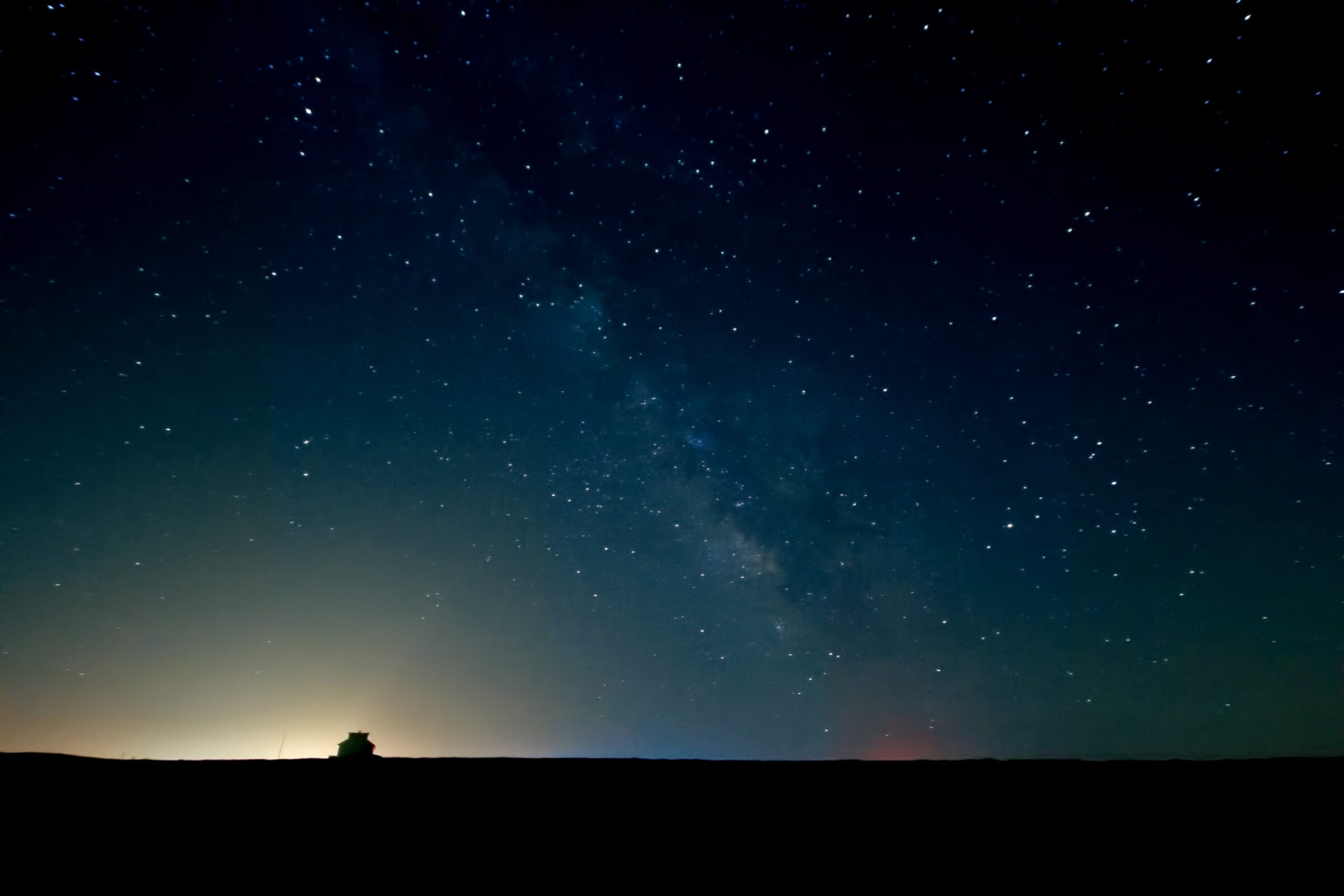
The Milky Way was already visible — stretching across the sky like someone had spilled glitter on black velvet.
Below it sat Station Race Point, quiet and steady against the dunes. Not dramatic. Not flashy. Just grounded beneath the sweep of the galaxy.
And that contrast — human structure under infinite sky — is what drew me in.
Dialing in the Night
Modern cameras have made astrophotography more accessible, but the fundamentals still matter.
This image was captured at:
ISO: 6400
Shutter Speed: 30 seconds
Aperture: f/4.0
Thirty seconds is about as long as you can go before stars begin to trail due to Earth’s rotation. I wanted pinpoint stars — not streaks.
High ISO allows the sensor to gather enough light, but push it too far and noise creeps in. Think of ISO like a stereo: too loud and everything gets fuzzy.
Yes, noise reduction exists. But I prefer to get as much right in-camera as possible.
Composition: Let the Sky Lead
Once exposure was locked in, composition became the focus.
The Milky Way was the hero.
Station Race Point was the anchor.
I shifted slightly to position distant ambient light behind the building — just enough to give it definition without overpowering the stars. I lowered the tripod almost into the sand to let the sky dominate the frame.
Only a thin strip of earth remains at the bottom of the image — a reminder of scale.
We are small.
The universe is not.
And yet, here we are — standing beneath it, trying to capture a fraction of its light.
The Lesson: Seek the Quiet
Places like Race Point remind you that darkness is not emptiness. It’s possibility.
If you want to photograph the Milky Way:
- Find a location far from city light
- Choose a moonless night
- Use a wide aperture and high ISO
- Keep shutter speed short enough to avoid star trails
- Use a sturdy tripod (yes, even in the sand)
And most importantly — pause before you press the shutter.
Sometimes you don’t take a photograph.
You receive it.
Technical Details
Camera / Lens: Canon 7D with 70–200mm f/2.8
Settings:
Aperture: f/4.0
Shutter Speed: 30 seconds
ISO: 6400
Light: Moonless night, natural starlight, faint ambient glow from distant structures
Approach: The sky was the hero. I lowered the tripod nearly into the sand so the Milky Way could dominate the frame, leaving just a sliver of earth to anchor the composition. I positioned the subtle glow behind Station Race Point to create separation without overpowering the stars. It was quiet — the kind of quiet that makes you aware of your own breathing. I wanted to carry that stillness and scale into the final image.
Tip: Scout during daylight if possible. Know where you’ll stand before the stars come out. In darkness, small adjustments feel big — and a sturdy tripod becomes your best friend.
Practice the Night Yourself
You don’t need a lighthouse or a Coast Guard station to try night photography. You just need darkness and patience.
Try this:
- Find a location away from city lights
- Choose a moonless night
- Use a tripod and experiment with 15–30 second exposures
- Keep ISO high enough to reveal stars but not so high that noise overwhelms detail
- Pause before pressing the shutter — let your eyes adjust and your mind settle
Sometimes the most powerful photographs happen when the world goes quiet.
Continue the Coastal Series
This photograph of the Milky Way over Station Race Point is available as a fine art print — created for spaces that invite stillness, reflection, and a little sense of wonder.
If this image resonates with you, explore the full Seascape and Night Sky collections to see how light — from golden hour to galactic hour — shapes each story along the coast.
Some pieces energize a room.
Others quiet it.
This one does both.
Landscape Gallery
Seascape Gallery
Night Gallery
From printer to wall—farm to table for your soul.