
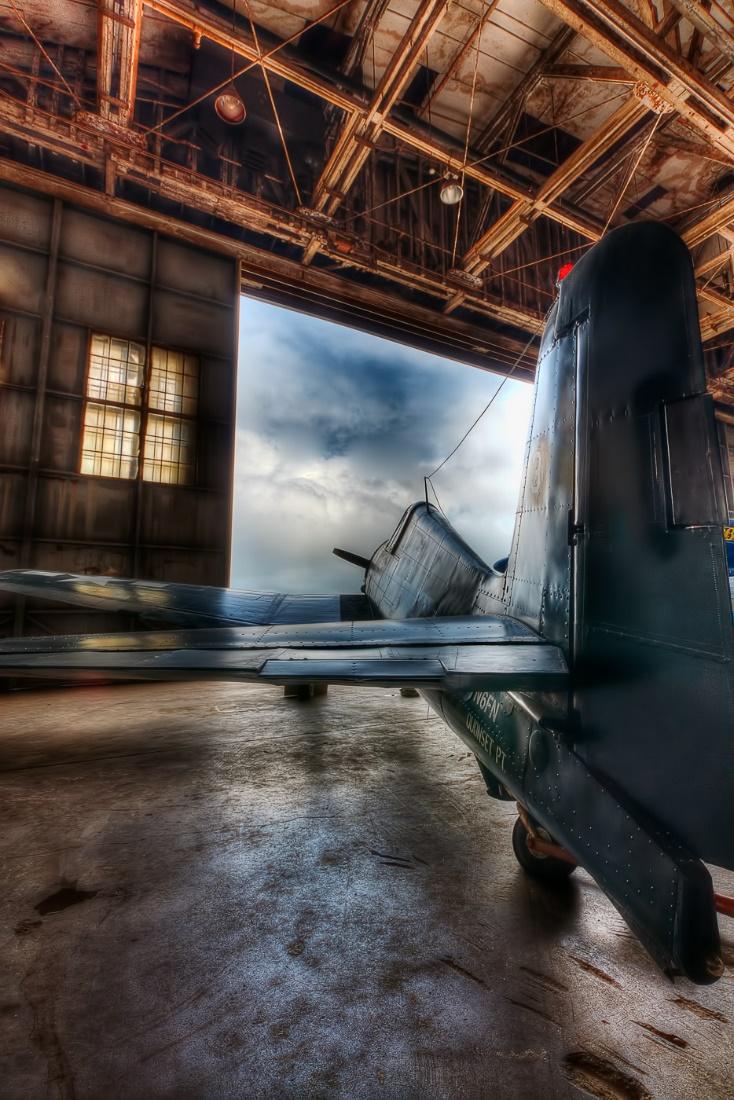
A rainy day and a random road sign for an air museum turned into one of my favorite photographs — and a small reunion with the kid who used to hang model airplanes from fishing line in his backyard.
One of my all-time favorite photographs. This little plane captivated my imagination from the moment I saw it.
Beginning in 1943, the F6F Hellcat soared into history as a carrier-based fighter aircraft in the Pacific Theater during World War II. It was credited with shooting down more enemy aircraft than any other fighter in the U.S. military’s arsenal. This was a machine built with a single purpose—fly fast, fight hard, and bring its pilot home.
It was a rainy day, one of those moody, gray New England skies with no hint of a break. My wife and I packed up the car in search of something to do—anything that didn’t involve sitting inside and watching raindrops race each other down the window. Somewhere along the drive, we spotted a small road sign for the Quonset Air Museum.
That one sign sent my brain into a tailspin—straight back to my childhood, where model airplanes cluttered my basement workbench. As an adult, I had spent years in the military, maintaining hulking C-130 aircraft. Rainy day or not, this was my kind of place.
Inside that dusty, dimly lit hangar, I was in heaven. I wandered among relics of the sky—crawling under wings, peeking into cockpits, feeling the stories echoing off the fuselage of every plane. But I was searching for something—an image, a story.
Eventually, one of the workers cracked open the hangar doors. A sliver of blue broke through the clouds. And that’s when I saw it—the F6F Hellcat, backlit by that clearing sky, waiting just inside the doors like it was itching to get back into the fight.
In that moment, this wasn’t just a museum piece. It was alive.
I circled behind it, imagining its engine roaring to life, the tires lifting from the tarmac, and the Hellcat launching into the heavens once more—diving in and out of the clouds, fierce and free.
I knew the shot I wanted.
I set my tripod low, just behind the tail, so the viewer would feel like they were crouched on the hangar floor, watching the sky from the Hellcat’s perspective. I adjusted the camera, working the angle, dancing with the light— until finally, I had it.
A photograph that didn’t just show a plane.
It told a story.
The best subjects sometimes find you on a day when you weren’t even looking for a subject at all.
This F6F Hellcat, caught mid-breath in a shaft of clearing light, is more than a museum piece in a photograph — it’s a story about history, imagination, and the machines that carried people home. A striking piece for anyone who loves aviation history or bold, dramatic black-and-white-feeling compositions.