
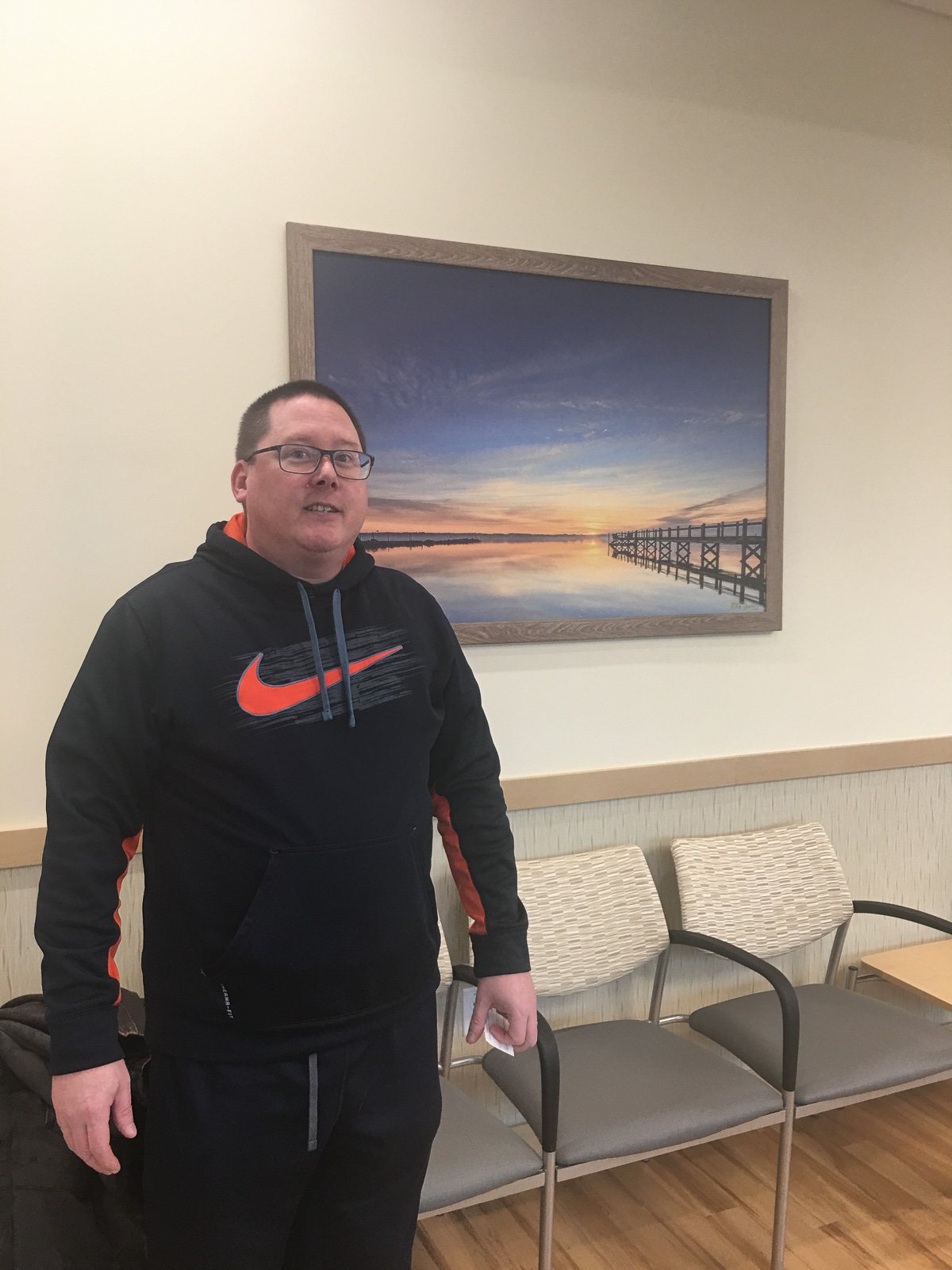
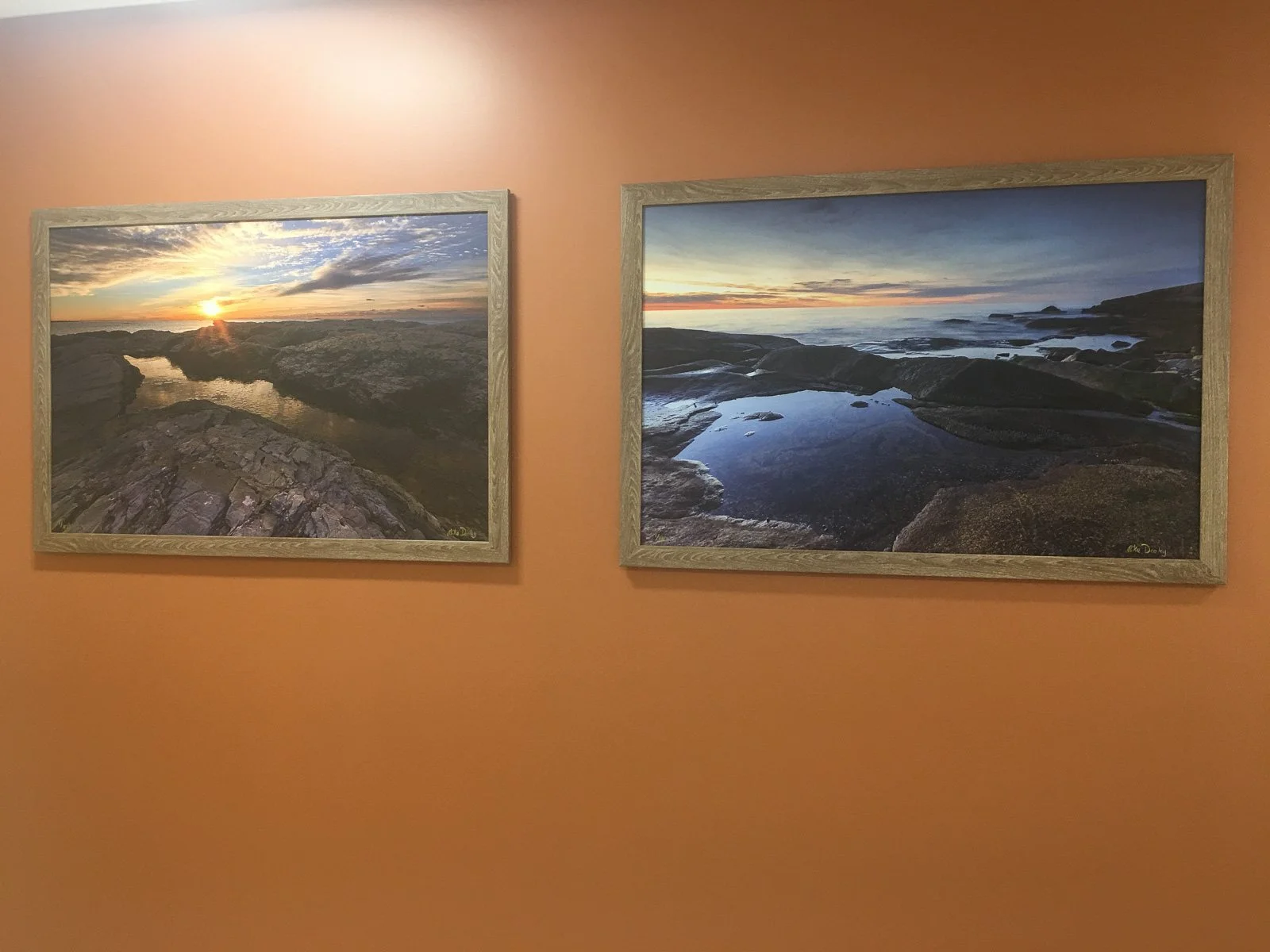
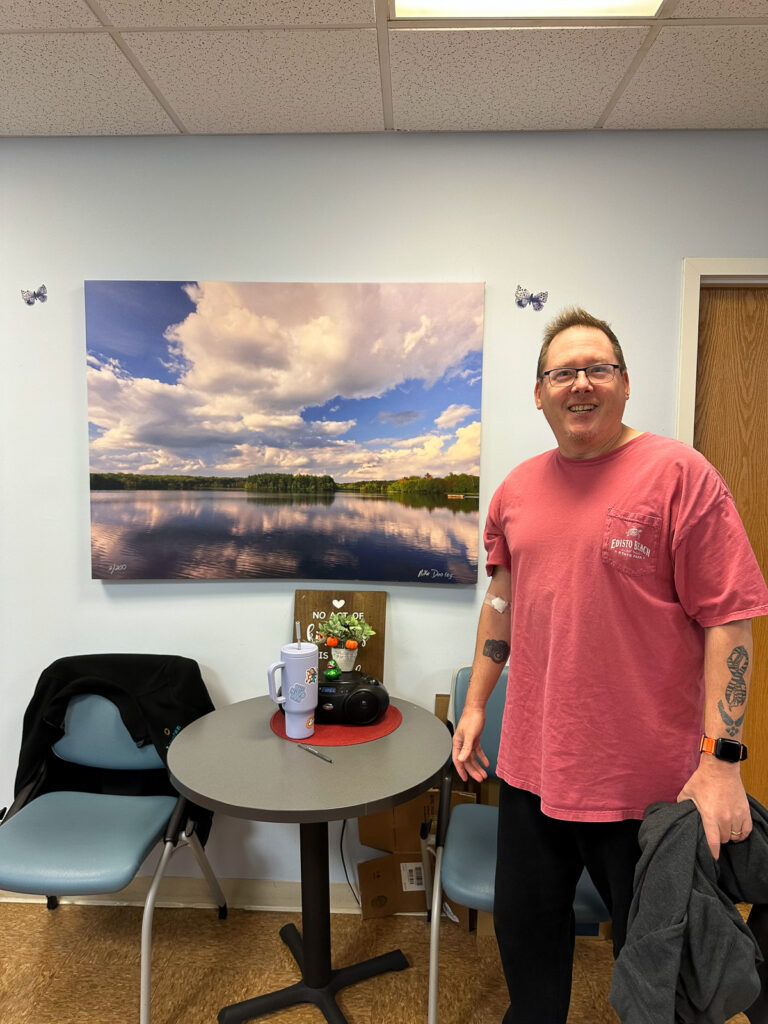
My landscapes and seascapes hang in hospitals, medical offices, nursing homes and the Rhode Island Veterans Home. People call it healing art for healthcare. I just pick them to give patients, families and staff somewhere calm to rest their eyes.
A while ago I got a message from a woman I knew from the local photography groups on Facebook. She was going in for a procedure at the hospital in Westerly, and while she waited to check in she noticed one of my photographs on the wall. “It sure made me smile,” she wrote. She told me that after seeing it, she knew things were going to be all right.
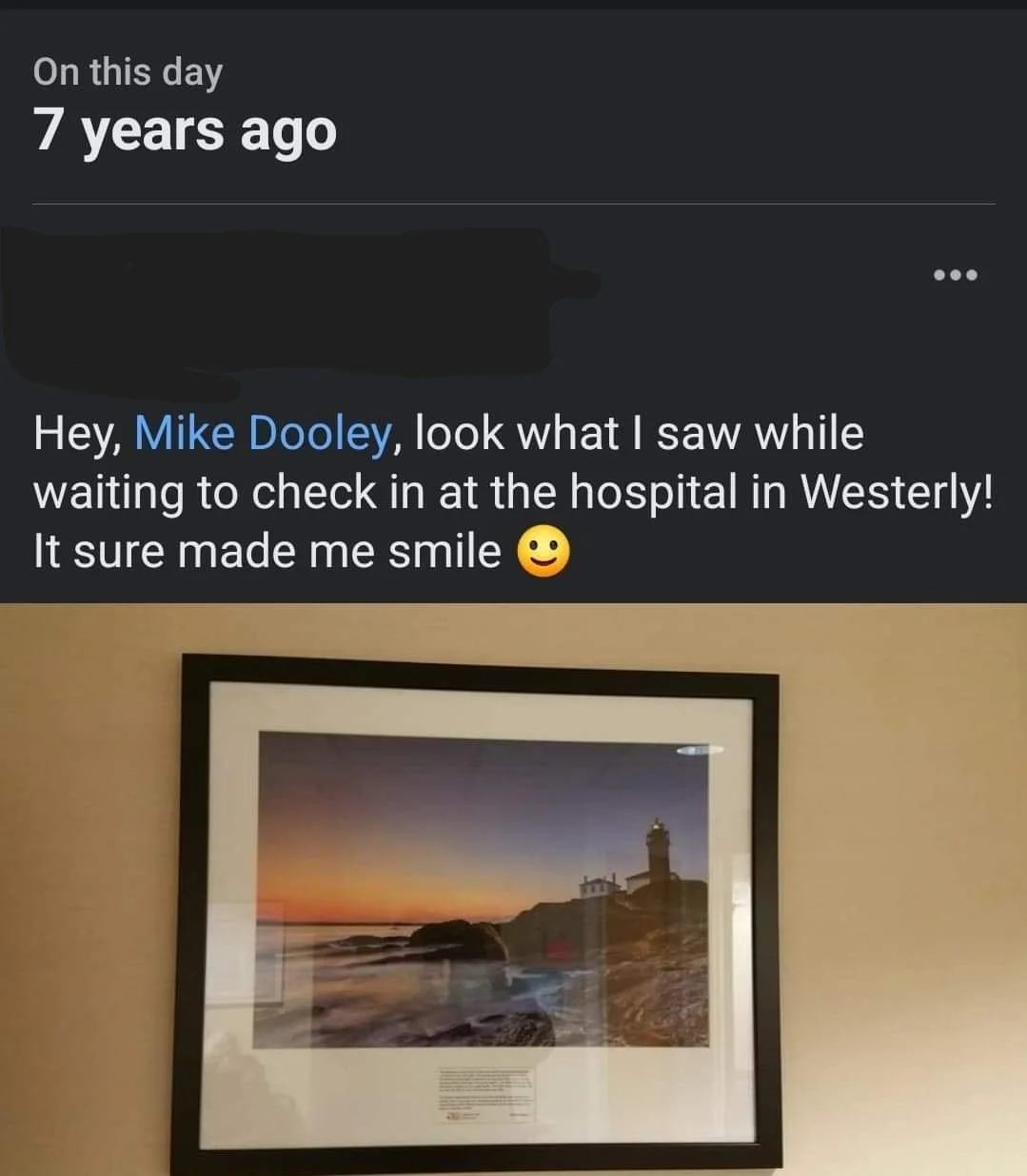
I think about that message often.
It’s a powerful reminder of what this work can do, and the people it can reach. More than anything, that message told me I’m on the right track. That I can help make that feeling happen for people when they need it most.
I’ve sat in those chairs
I’m not writing this from the outside. Between my own medical disaster (I wrote about it in my book, Hope) and my wife’s 18-month recovery from sepsis and septic shock, I’ve spent more time in medical offices than anywhere else in the world.
I know that stress. I know that anxiety. I know the pain.
Along the way I learned a lot about anxiety, and about mindfulness, and how to manage my own medical PTSD. One of the simplest tools is to ground yourself. Name something you can see. Something you can hear. Something you can touch.
A photograph is the perfect place for me to put that energy. I look at it and imagine being there. The sound of the water, the cold air, the light coming up over the horizon. It’s an escape, even if it’s only for a minute.
I can also tell you what’s on most medical walls. An anatomical poster of a spinal cord. A cross-section of a knee. A framed diagram of a “normal” foot. I get why they’re there. But when you’re the one sitting on the crinkly paper waiting for news, a picture of somebody else’s vertebrae is not helping.
Does art really help patients?
The short answer is yes, and people have been studying it for a long time.
Back in 1984, a researcher named Roger Ulrich published a study in Science. Surgical patients whose window looked out at trees went home sooner and needed less strong pain medication than patients whose window faced a brick wall. Later work by Ulrich and others found that nature in artwork can do a lot of the same things: lower anxiety, less pain, and a better feeling about the care people received.
One honest note, because I’d rather you hear it from me. Newer research shows patients respond well to lots of kinds of art, not just landscapes. So the lesson isn’t “only nature photos work.” It’s that calm, thoughtful art beats bare walls and clinical clutter every time. That’s all healing art for healthcare really means to me. Nobody gets cured by a picture, but the wait gets a little easier.
Here’s what I take from all of it:
- Pick calm over clever. Soft water, open sky, a clean horizon.
- Skip anything moody or confusing. A hospital is not the place for a crashing storm.
- Put art where people actually wait, not just in the lobby.
Sources: Ulrich, R.S. (1984), “View through a window may influence recovery from surgery,” Science; Finkel et al. (2021), HERD Journal.
Where does healing art make the biggest difference?
- Waiting rooms. First impression, longest wait.
- Exam rooms. Patients sit in there alone longer than anyone thinks. (And I haven’t seen a Reader’s Digest in one of those rooms in years.)
- Infusion, dialysis and treatment areas. Long sessions, same wall, hour after hour.
- Senior living and memory care. A familiar place, like a lighthouse someone grew up near, can start a conversation.
- Rehab and physical therapy. Something hopeful to look at while you’re working hard.
- Labs and blood draw stations. Trust me on this one.
- Staff break rooms. The people doing the caring need a minute too.
- Family waiting areas. I’ve been the one pacing in there. A calm wall helps.
What kind of print works best?
Most of the healthcare work I’ve done has been gallery wraps: the print is stretched around a wooden frame, so there’s no frame and no glass. You hang it on a nail and you’re done. Nothing gets between the art and the person looking at it.
Metal prints are also available, and for public spaces they make a lot of sense. Mine are made by Blazing Editions in East Greenwich, Rhode Island. I’ve worked with them for years, toured their facility, promoted their work to photo clubs, and even helped set up an open house there for the Photographic Society of Rhode Island. When I tell you how these hold up, that’s where it comes from.
They hang just as easily as a gallery wrap, with no frame and no glass. On top of that:
- They wipe clean with a microfiber cloth and a regular household cleaner.
- The image is sealed under the surface coating, so they hold up to scratches and bumps.
- They’re light, even at large sizes.
- They’re rated to last 65+ years without fading (Wilhelm Imaging Research testing).
For busy waiting rooms and hallways, I think metal is where things are headed.
If your facilities or infection-control team has specific requirements, send them over. They get the final word.
A few that work in waiting rooms
Calm water, soft light, nothing that makes anybody tense up. Think of these as a starting point. Tell me about your rooms and I’ll pull a set that fits them.
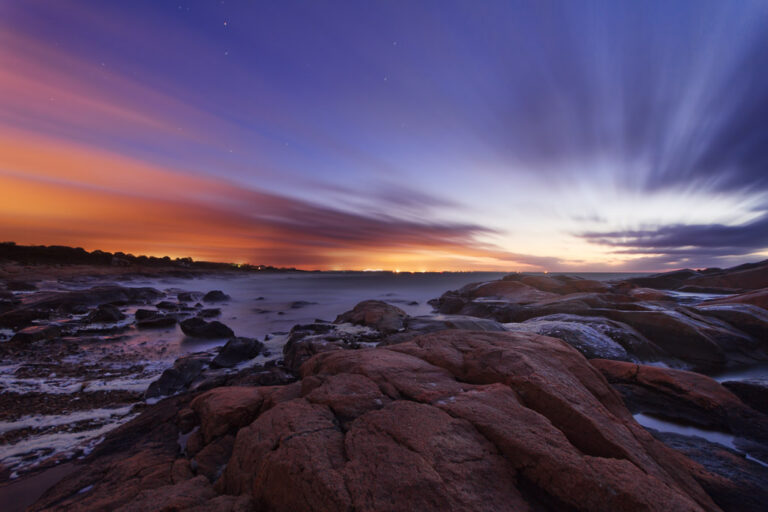 Before the Dawn
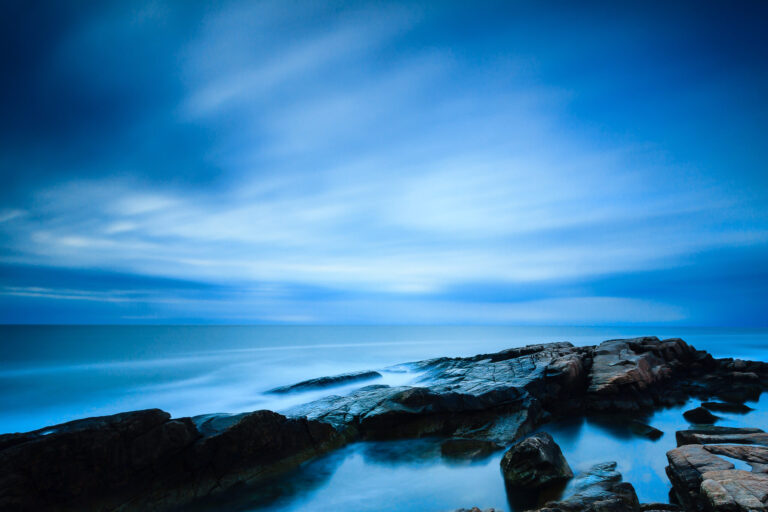 Blue
Blue Soft Sunrise at Whale Rock
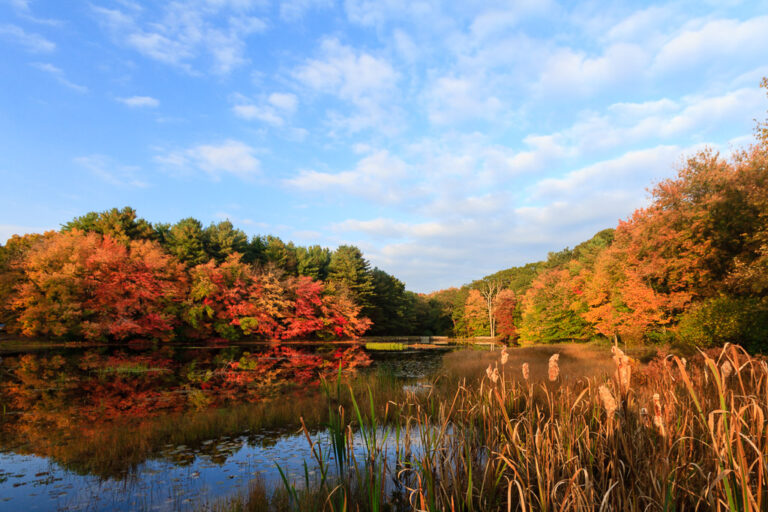 Reflection of Fall Colors
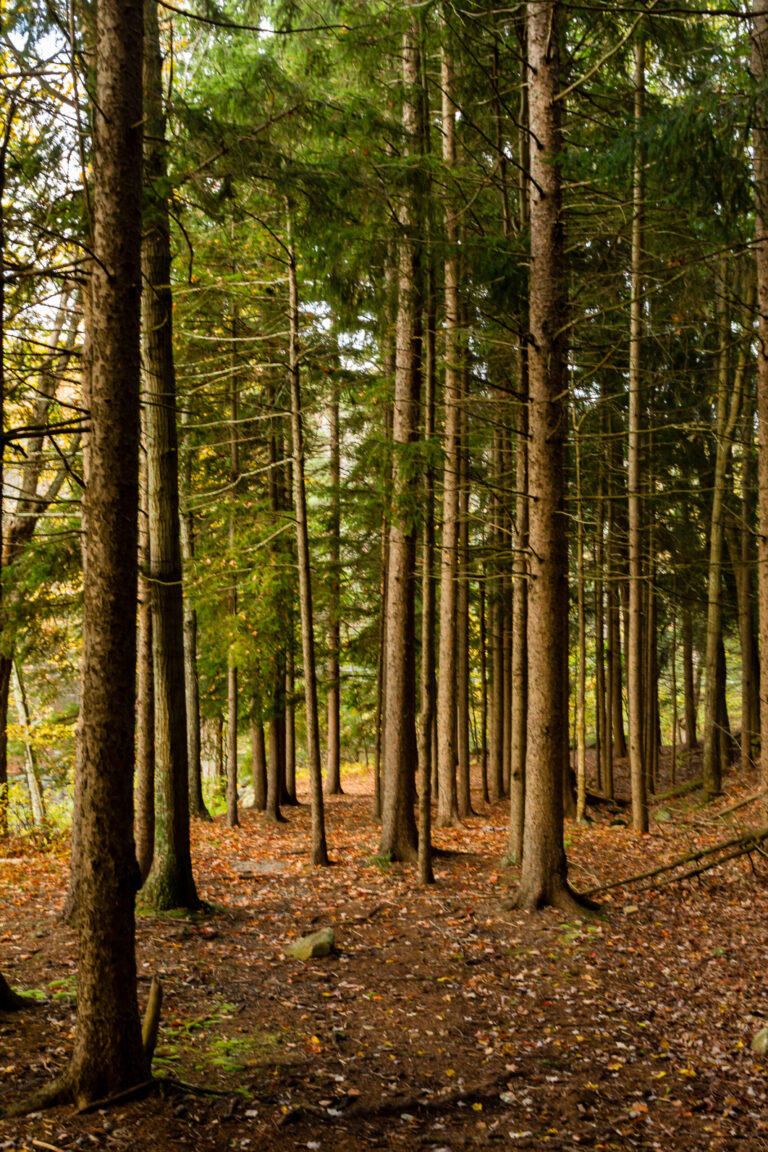 The Woods
 Salter Grove Winter Sunrise
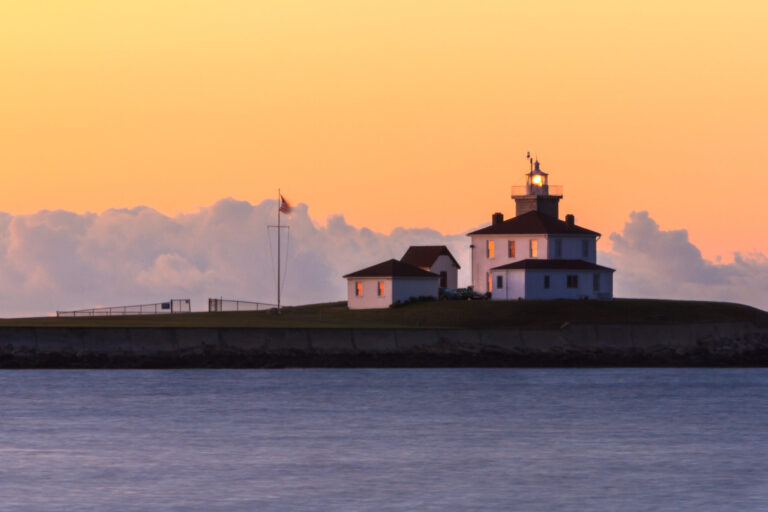 Watch Hill Light Greets Sunrise
 Sunset Surf at Nokomis Beach
Where you’ll find my work
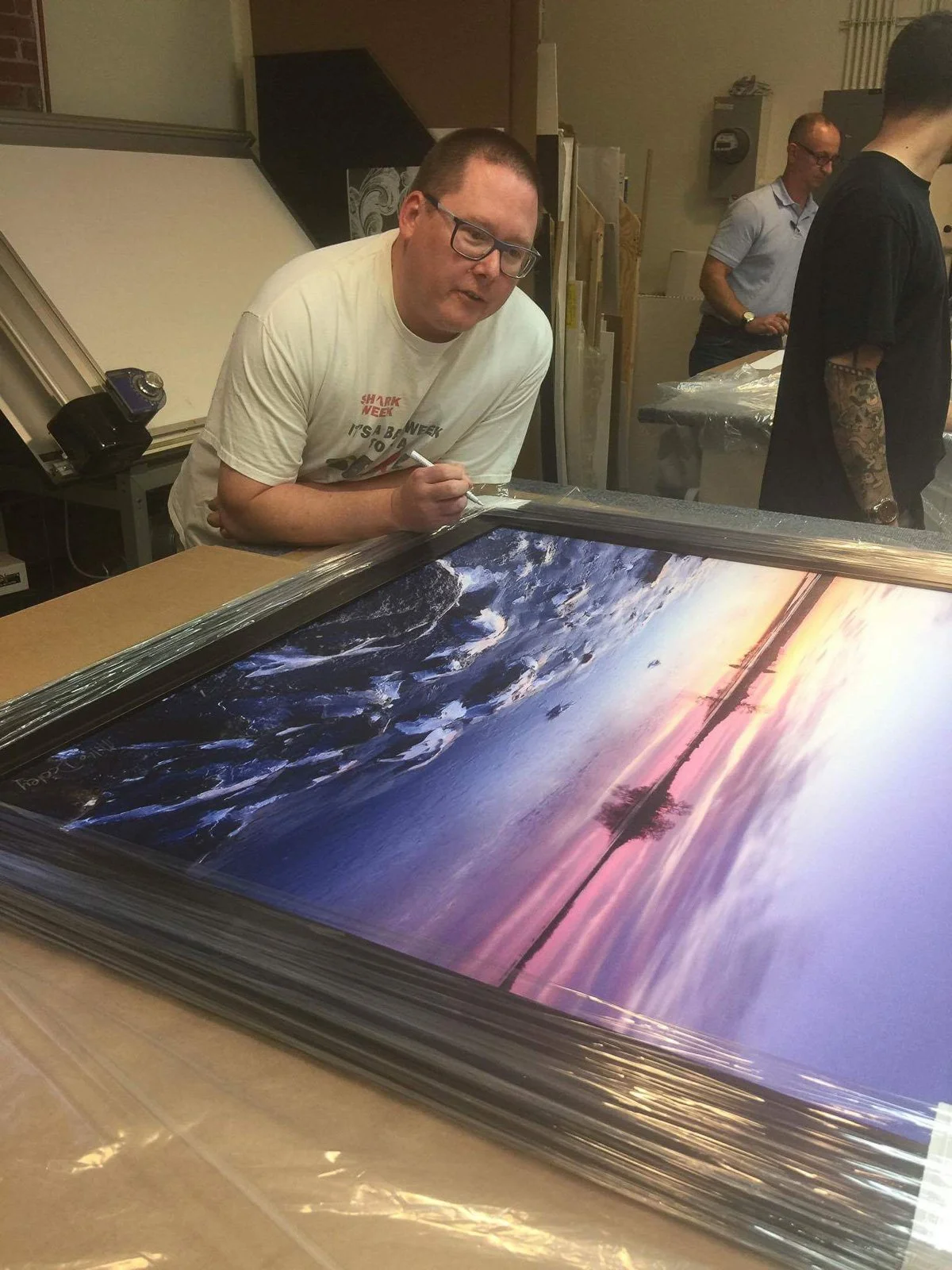
- The Rhode Island Veterans Home. I signed a framed winter print of Salter Grove in Warwick before it went up. As a veteran myself, that one meant a lot.
- A doctors’ waiting room in East Providence. A big landscape canvas over the chairs.
- The blood lab. You might have read about that one already. The staff had bets going on where the photo was taken.
- Hospitals, nursing homes and medical offices around Rhode Island, mostly placed through art consultants and framers I’ve worked with for years.
I keep running into my own prints at appointments. It never gets old.
How does it work?
- Tell me about your space. The rooms, who uses them, wall sizes, and any rules from facilities or infection control. A quick call or an email is fine.
- I put together a short list. Calm images matched to each room, with suggested sizes.
- It gets made and hung. If you work with an art consultant or framer, I send them the file and they take it from there. If you don’t, I have people I trust for printing and framing.
Doing a dedication, a donor wall, or a memorial room? I’ll come sign the piece when I can get there.
Questions people ask
What kind of art is best for a doctor’s office waiting room?
Calm nature photography: seascapes, open landscapes, soft water and big skies. It gives anxious people somewhere quiet to look without adding more visual noise.
Is there actual research behind this?
Yes. Roger Ulrich’s 1984 study in Science linked nature views to shorter hospital stays and less pain medication, and later studies found nature in art can lower anxiety and pain. Patients respond well to many styles, so calm and thoughtful matters more than any one style.
What kind of print is best for a hospital or clinic?
Gallery wraps are the most popular: no frame, no glass, easy to hang. For busy waiting rooms and hallways, metal prints are a great option. They wipe clean, resist scratches and hang just as easily. Always check with your infection-control team for their requirements.
Do you work with senior living and memory care?
Yes. Familiar coastal scenes and local landmarks work especially well there. They give people something to talk about.
Can you pick different art for exam rooms versus the lobby?
That’s exactly how I do it. Quieter, simpler images for exam and treatment rooms, bigger pieces for lobbies and waiting areas.
Will you work with our art consultant or framer?
Happily. That’s how most of my healthcare work ends up on a wall. I license them the file and they handle printing and installation.
Let’s talk about your rooms
Tell me about the space and the people in it. I’ll write back myself, usually within a day.
Back to Art for Business → · Hotels, restaurants & offices → · For consultants & designers →